Electroosmotic haptics at fingertip scale.
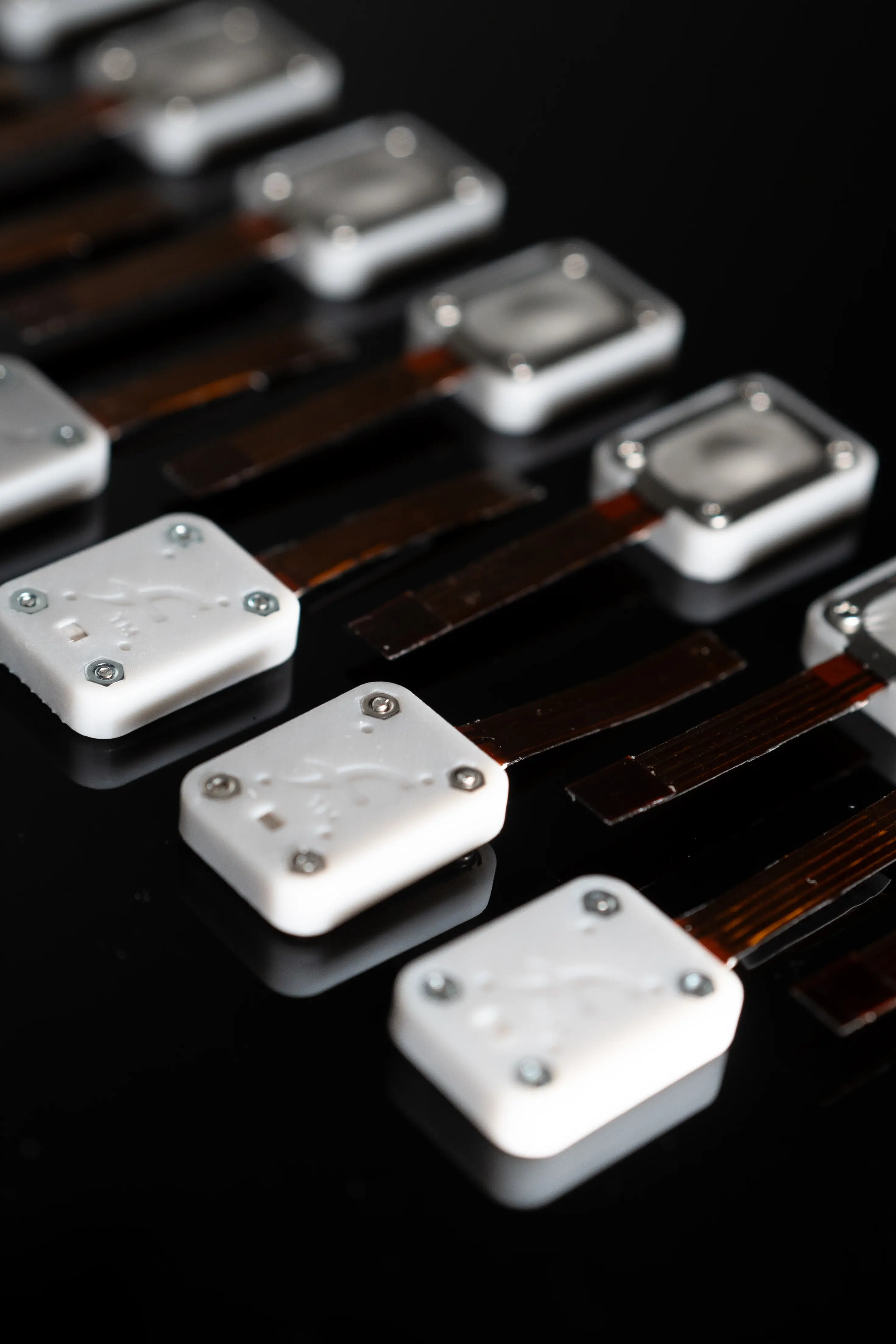
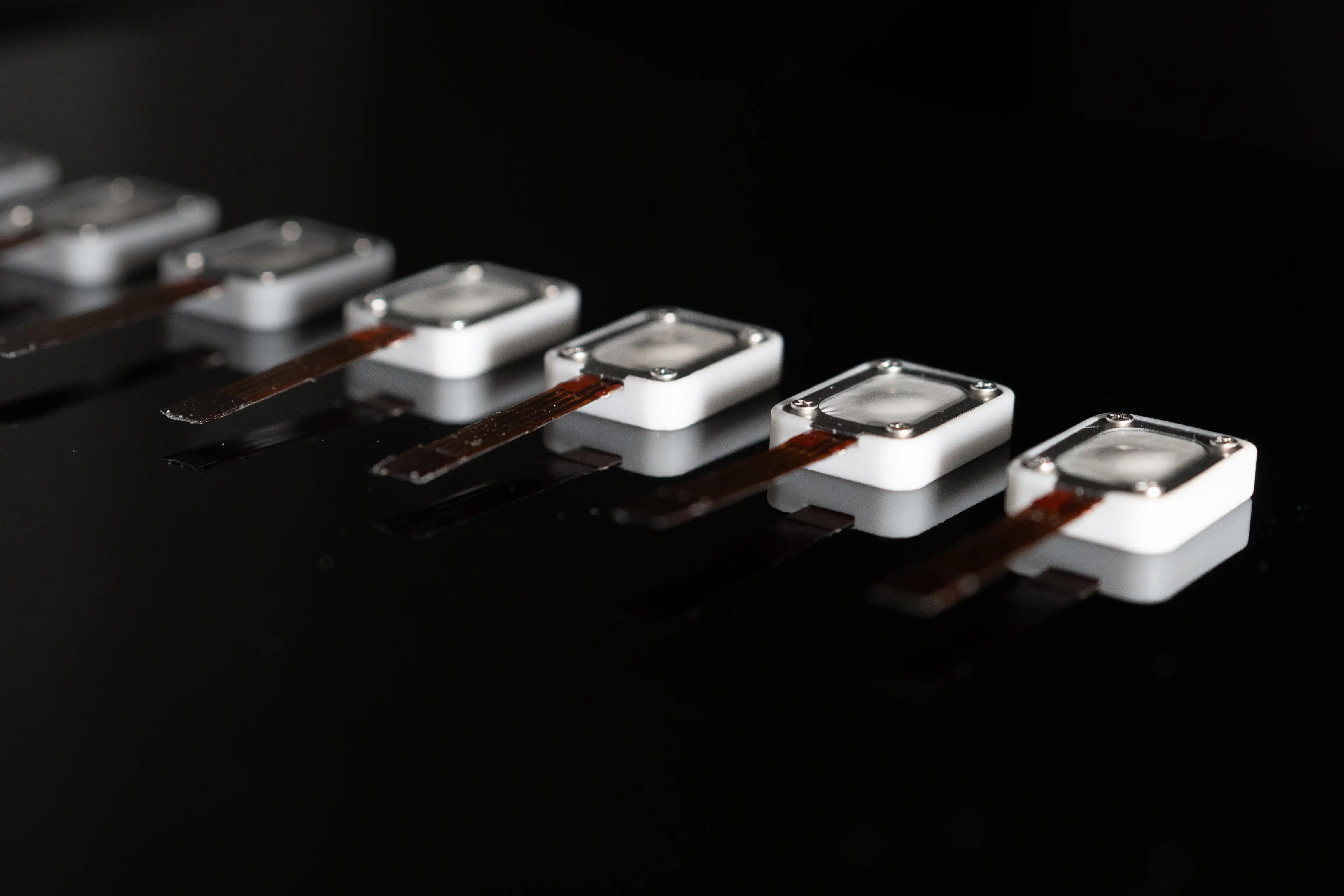
The highest-resolution haptic feedback actuators in the world, 100x smaller than anything before them. Small enough to put real touch under every fingertip of a teleoperation controller.
How it works
Step 01
An electric field moves fluid
Inside each actuator, an electroosmotic pump drives working fluid with no motors, no compressors, no moving mechanical parts. Silent and solid-state.
Step 02
Fluid pressure shapes the surface
The displaced fluid presses the actuator surface against your fingertip with analog control: 128 pressure levels, updated 1,000 times a second.
Step 03
Your skin reads it as touch
Contact, pressure, and release arrive in under 15 milliseconds, fast enough that what the robot feels and what you feel are the same event.
Actuator diameter
Response time
Pressure levels
Update rate
What electroosmosis gets you
| Dimension | Fluid Reality | Everything before |
|---|---|---|
| Size | 6 mm dia × 5 mm thick, fits on a fingertip | Pneumatic rigs: pumps, valves, and tubing off the hand |
| Cost | A fraction of the cost of comparable-resolution systems | Comparable-resolution systems priced like lab equipment |
| Feedback | True analog pressure: 128 levels per actuator | Vibration motors: buzz, not contact |
| Sound | Silent | Compressors and pumps you can hear across the room |
| Integration | USB serial, Python SDK, fully documented protocol | Custom drivers and bespoke integration projects |
Touch is the data physical AI needs.
Operators who can feel demonstrate contact-rich tasks correctly — plugging in a USB‑C cable, threading a screw — and capture the contact dynamics no camera can see. The policies trained on those demonstrations inherit the difference. That is the path from teleoperation to earned autonomy: 1:1, then 1:5, then 1:30.
3
Patents pending
1
Patent issued
2
Foundational papers
Read the background research: FluidReality and flat-panel haptics.
Technical FAQ
How long do actuators last?
Up to 1,000,000 cycles, depending on your driving profile.
What does it take to drive them?
A driver controller (included in every kit) handles the integrated 225 V solid-state supply and exposes 8 channels over USB serial at a 1 kHz update rate. You write Python (or serial commands).
Is this certified for production lines?
Not yet. Kits are research prototypes, not CE/UL certified, sold for research, development, and evaluation.